Planning & Gear
Getting to Isle Royale and packing for a week in the backcountry.
Getting to Isle Royale
Planning a backcountry trip to Isle Royale takes a lot more work than a normal camping trip. The island is only accessible by ferry or seaplane and once you get there you are on your own. There are no stores, no roads, and no services anywhere on the island. We are taking a ferry out of Copper Harbor, Michigan. Just getting to Copper Harbor is a trip in itself since it is about a ten hour drive from our area. The crossing from Copper Harbor to Rock Harbor on the east end of the island takes about three and a half hours across open Lake Superior water. During the busy summer months the ferry runs more frequently, but outside of peak season it does not operate every day so you really need to plan your dates carefully and book early. You also need to purchase a park entrance pass and fill out a backcountry camping permit which you can pick up at the ranger station when you arrive at Rock Harbor. The permit is free but required and you will need to list your planned campsites for each night of the trip. Rangers recommend keeping your itinerary flexible in case weather or trail conditions force you to change your route.
Gear and Food Essentials
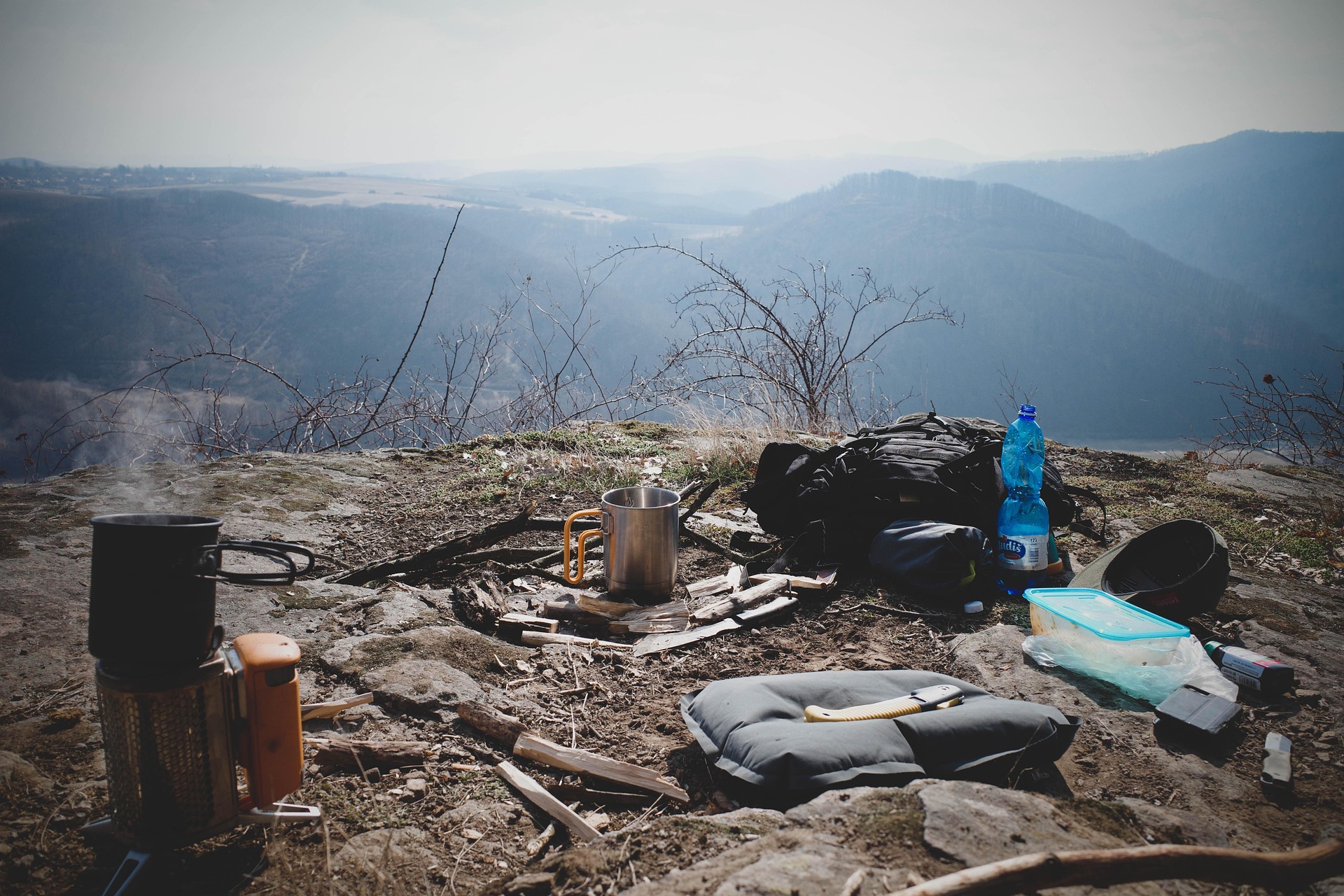
Packing for a week on Isle Royale is a completely different game than loading up the truck for a weekend at a campground. Every single ounce matters when you are carrying everything on your back for seven days straight. The big difference between regular camping gear and backpacking gear comes down to weight. A normal camping tent might weigh eight or ten pounds, but a backpacking tent needs to be closer to three or four. Same goes for sleeping bags, cook systems, and everything else. You are looking at every item and asking yourself if it is worth hauling up and down ridgelines for a week. We are each carrying a lightweight pack, a three-season sleeping bag rated for the upper thirties, a sleeping pad, rain gear, and layers for cool mornings and evenings on the lake. A good topographic map and a reliable compass are absolutely essential out here. There is no cell service on the island and GPS devices can fail, so knowing how to navigate with a map and compass is not optional. For certain pieces of gear it is smart to follow the one is none, two is one rule. That means carrying a backup for anything critical. Two ways to start a fire, two methods of water purification, an extra headlamp or at least extra batteries, and a backup knife or multi-tool. If something breaks or gets lost five miles from the nearest campground, you do not get to run to a store. Food planning is a big part of the weight equation too. We are bringing dehydrated meals, oatmeal, trail mix, and jerky for the bulk of our calories, but we plan on supplementing our camp meals with the daily catch. Isle Royale has solid fishing in both Lake Superior and the inland lakes, whether that is lake trout, pike, brook trout, or walleye. A good day of fishing means less food you have to carry in. That said, you can never count on catching anything. The fish do not care about your meal plan, so you have to pack enough food to cover every meal for the entire trip regardless. Anything you catch is a bonus, not the plan. A lightweight backpacking stove is a must out here because most of the park falls within a designated wilderness area where campfires are not allowed. That means no cooking over a fire at most campsites, so a compact stove and a small fuel canister are the only way you are making a hot meal at the end of the day.